Fragile Item Handling in Dubai Every Piece Treated as Irreplaceable
Fragile item handling in Dubai is a specialist service category that separates professional movers from every other provider in the UAE market — because the difference between a piece that arrives undamaged and one that does not is entirely determined by the decision made in the first 60 seconds of handling: which material goes on first, how the item is supported, and whether the person handling it understands what makes it fragile. emoversllc is a professional fragile item handling company in Dubai that applies an item-specific protection protocol to every fragile, valuable, and irreplaceable possession — artwork, antiques, mirrors, chandeliers, sculptures, pianos, fine ceramics, electronics, and luxury furnishings — before a single centimetre of protective material is applied.
Dubai's residential properties contain a higher density of high-value, irreplaceable, and fragile items than almost any residential market in the world. Original artworks from international galleries, antique furniture sourced from European auction houses, bespoke chandeliers from Italian lighting ateliers, and custom-made glass and marble furniture from UAE interior designers are present across villa and apartment properties in every district of the city. emoversllc handles every category with photography before packing, item-matched protection protocols, declared-value insurance documentation, and a move record that closes only when the client confirms every piece arrived in the same condition it left.
What Makes an Item Fragile in Dubai
The 5 Dimensions of Fragility That Determine the Protocol
Fragility is not a single property — it is a combination of 5 physical and financial dimensions that together determine how an item must be protected during packing, loading, and transit. emoversllc assesses every item against all 5 dimensions before selecting its protection protocol — not a single dimension in isolation.
The 5 dimensions of fragility that determine the protection protocol applied by emoversllc in Dubai:
Structural Brittleness
An item is structurally brittle if its primary material fractures under impact rather than bending or deforming. Glass, ceramics, marble, crystal, and cast materials are structurally brittle. A single unprotected drop or contact event breaks them permanently.
Surface Sensitivity
An item is surface-sensitive if its finish degrades under contact with adhesive materials, UV light, moisture, or pressure. Lacquered wood, polished metal, hand-painted surfaces, silk upholstery, and gold-leaf finishes are surface-sensitive. Standard moving blankets can leave adhesive residue on lacquered surfaces and pressure marks on polished finishes.
Structural Complexity
An item is structurally complex if it has protruding elements, joints, hinges, or components that extend beyond its primary profile. Chandeliers with pendant crystals, sculptures with extended limbs, grandfather clocks with pendulums, and antique chairs with carved details all have structural complexity that creates breaking points under wrapping pressure if the protection system does not account for the protrusions.
Value Irreplaceability
An item is irreplaceable if its financial or personal value cannot be fully recovered through insurance payment. An original artwork by a deceased artist, a family heirloom, a custom-made piece, or a limited-edition object is irreplaceable in the sense that no financial settlement recreates the original. Irreplaceable items warrant the most comprehensive protection the handling system can provide.
Vibration and Shock Sensitivity
An item is vibration-sensitive if its components or internal mechanisms degrade under sustained vibration or a single shock event. Grand pianos, grandfather clocks, sensitive scientific instruments, audio equipment with valve components, and vintage wine collections all experience vibration-related damage during transit that does not produce a visible break but degrades the item functionally or qualitatively.
The emoversllc Fragile Item Handling Protocol
6 Stages Applied to Every Piece
emoversllc applies a 6-stage fragile item handling protocol to every item identified as fragile, valuable, or irreplaceable during the pre-move survey. The protocol is not a checklist — it is a sequential physical process where no stage begins until the previous stage is complete and verified. Every stage is performed by a crew member trained specifically in fragile item handling — not a generalist moving crew member reassigned to a fragile item on move day.
Item Assessment and Fragility Classification
Every item is assessed individually for its 5 fragility dimensions: structural brittleness, surface sensitivity, structural complexity, value irreplaceability, and vibration sensitivity. The assessment determines which protection materials are applied, in which sequence, and whether custom crating is required. No item classified as fragile proceeds to Stage 2 without a confirmed protection plan.
Pre-Move Photography
Every fragile item is photographed from all 6 sides (front, back, left, right, top, and base) before any protective material makes contact with the item. Photographs are time-stamped and stored against the move record. For high-value items, existing damage, wear, or surface conditions are documented in photograph notes to establish the baseline condition that closes against the post-delivery inspection.
Surface-Safe First Layer Application
The first protective layer applied to every fragile item is a non-adhesive, non-abrasive material matched to the item's surface type: acid-free tissue paper for paintings and artworks, non-adhesive polyethylene foam for lacquered and polished surfaces, clean cotton muslin for gilded and gold-leaf surfaces, and micro-fibre wrap for polished metal and stainless steel finishes. The first layer never uses adhesive materials that could damage the surface on removal.
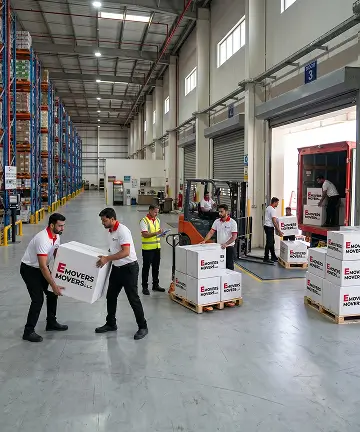
Structural Protection Layer
Over the non-adhesive first layer, a structural protection layer is applied based on the item's brittleness and complexity: polyethylene foam wrap for ceramics and glass, bubble wrap for curved glass and crystal, cardboard corner guards for all 90-degree edges and corners, and foam pipe insulation for protruding sculptural elements and chandelier pendants. The structural layer protects against impact forces that the first layer is not rated to absorb.
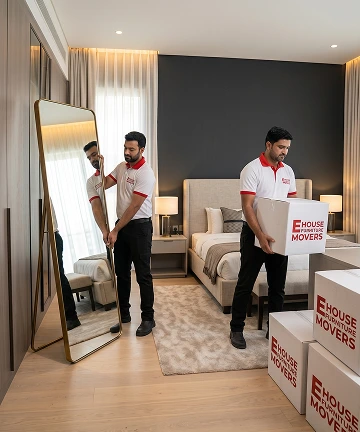
Outer Wrap and Crating
The final outer layer is selected based on the item's weight, size, and transit duration: padded moving blanket and stretch film for domestic transit, moisture-resistant polythene and double-walled carton for domestic storage, and custom ISPM-15 timber crating for international transit or exceptionally high-value items on any move. Crates are built to the exact external dimensions of the protected item — no movement inside the crate during transit.
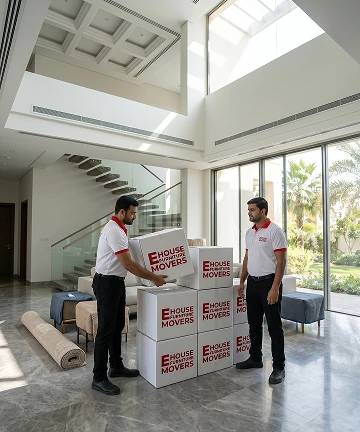
Vehicle Placement and Securing
Every fragile item is loaded into a designated fragile cargo section of the moving vehicle, positioned in the orientation specified by its fragility type: paintings and mirrors transport vertically on edge, not flat; ceramic items and glass transport upright with padding beneath; sculptures and chandeliers transport with their heaviest element at the base and their most vulnerable element away from the vehicle wall. All fragile items are secured with load straps that contact the outer packaging, not the item surface.
Item-by-Item Fragile Handling Guide
10 Categories, 10 Distinct Protocols
The following 10 item categories represent the fragile goods most commonly handled by emoversllc in Dubai. Every category has a distinct protection protocol based on its specific fragility dimensions — not a single generic fragile-item method applied across all types.
Artworks and paintings are the most surface-sensitive fragile items handled by emoversllc in Dubai. Canvas, panel, and paper-based works each have different surface vulnerability profiles: oil paint on canvas is vulnerable to abrasion and temperature fluctuation; works on paper are vulnerable to moisture and pressure; acrylic and mixed-media works are vulnerable to adhesive residue from standard wrapping materials. Framed works carry the additional risk of glass breakage transmitting impact to the work surface during transit.
emoversllc artwork handling protocol in Dubai:
- Pre-move condition photography: all 6 sides documented, existing edge wear and surface condition noted in writing.
- Acid-free tissue paper applied directly to the artwork surface — non-adhesive, non-reactive with pigments.
- Polyethylene foam wrap applied over the tissue layer, cut to exact work dimensions.
- Cardboard corner guards on all 4 frame corners to prevent corner impact damage.
- Glass-fronted works receive a cross of masking tape on the glass interior to contain glass fragments if breakage occurs during transit — preventing secondary damage to the work surface.
- Custom timber crating built to exact external dimensions for works above 80 cm on either axis or with declared value above AED 10,000.
- All artworks transported vertically on edge in the vehicle fragile section, never flat.
- Declared value confirmed with the client and documented on the insurance record before the work leaves the property.
Sculptures present the most structurally complex fragile item handling challenge of any category — because no two sculptures share the same profile, the same material composition, or the same combination of protruding elements that require individual protection. Bronze, marble, stone, ceramic, glass, resin, and mixed-material sculptures each require a different first-layer material, a different crating geometry, and a different vehicle placement orientation.
emoversllc sculpture handling protocol in Dubai:
- 3D photographic documentation of all protruding elements and surface details before any protective material is applied.
- Material-matched first layer: acid-free tissue for bronze and patinated metal, non-adhesive foam for marble and stone, clean cotton for glazed ceramic.
- Foam pipe insulation applied to all thin protruding elements (limbs, spires, handles) before outer wrap.
- Foam-formed custom cavity insert built inside the crate to hold the sculpture in its natural weight distribution without pressure on the most fragile protrusions.
- Timber crate built to the exact sculptural profile with foam cavity — no space for movement inside the crate in any axis.
- Heavy stone and marble sculptures assessed for floor load rating at the destination before placement — marble sculptures above 200 kg require structural assessment.
- All sculptures transported in the vehicle fragile section in their natural base-down orientation where the base supports the sculpture’s weight distribution.
Antique furniture presents a handling challenge that modern furniture does not: the joinery is aged, the adhesives are historic, and the surface finishes are irreplaceable. A force that would not affect a modern flatpack wardrobe can split a 200-year-old mortise joint. Antique furniture in Dubai properties includes European pieces from 17th to 19th-century makers, Middle Eastern antique items, and Asian antique furniture — each with different construction methods and surface vulnerabilities.
emoversllc antique furniture and decorative object handling protocol in Dubai:
- Structural assessment of all joints before disassembly: aged joinery that resists manual force is not disassembled — the piece is moved assembled with reinforced joint support.
- Cotton muslin first layer on all gilded, gold-leaf, and painted decorative surfaces.
- Non-adhesive foam wrap over muslin layer, secured with paper tape — not plastic adhesive tape.
- Padded moving blankets applied over foam layer with stretch film securing the blanket, not contacting the antique surface.
- Antique decorative objects with protruding ormolu, porcelain insets, or applied decorations receive individual element foam wrapping before full-piece outer wrap.
- Antique clocks transported with pendulums removed, packaged separately, and labeled for reinstallation.
- All antique items photographed against their condition report before packing and inspected against photographs at delivery.
Mirrors and glass furniture are the most frequently broken fragile items in Dubai moving jobs — because most movers treat them as large flat objects rather than as glass panels. A mirror transported flat in a van is subject to the full flexural stress of every road vibration across its entire unsupported surface. A glass dining table transported on its side without corner protection fractures at the first kerb drop. emoversllc treats every mirror and glass surface as a structurally brittle panel that requires vertical transport and full-edge protection.
emoversllc mirror and glass furniture handling protocol in Dubai:
- Pre-move masking tape cross applied to the glass surface interior — contains fragments if breakage occurs, preventing secondary damage to frame and surrounding items.
- Corner guards on all 4 glass corners — foam-padded cardboard guards rated for the glass weight.
- Polyethylene bubble wrap applied to the full glass surface, secured with paper tape on the glass face and adhesive tape only on the frame.
- Mirror boards: two sheets of 6mm corrugated cardboard cut to the mirror’s exact dimensions sandwiching the wrapped mirror for rigidity during handling.
- Custom timber crating for all freestanding mirrors above 150 cm and all mirrors with a declared value above AED 5,000.
- All mirrors and glass panels transported vertically on edge in the vehicle fragile section, supported by foam blocks at the base.
- Glass table tops removed from their bases, wrapped and crated separately, transported vertically — never flat on the vehicle floor.
Chandeliers are the most architecturally complex fragile item in a Dubai home — because they are designed to hang, not to be moved. Every pendant, crystal arm, chain link, and wiring harness must be disassembled in a sequence that prevents the crystal elements from colliding with each other and the arms from bending under their own weight during packing. Bespoke chandeliers from Italian ateliers, Swarovski crystal chandeliers, and custom Arabic lantern-style fixtures are present in a high proportion of Dubai villa and apartment properties.
emoversllc chandelier handling protocol in Dubai:
- Photographic documentation of the chandelier assembled and installed before any disassembly begins.
- Crystal element removal: each crystal pendant, arm, and chain section removed individually and wrapped in tissue and foam.
- Crystal elements packed in compartmentalized foam-insert boxes, with each compartment sized to one crystal element — no loose crystal-to-crystal contact.
- Arms and frame sections: padded with foam pipe insulation on all protrusions, wrapped in non-adhesive foam, then outer padded blanket.
- Central body and wiring harness: bubble-wrapped and boxed, with the electrical connection points protected with foam plugs.
- All chandelier components labeled by assembly position using the pre-move photograph as reference for reinstallation.
- Chandelier boxes and wrapped components positioned in the vehicle fragile section with the heaviest element (central body) at the base.
- emoversllc does not reinstall chandeliers — the client arranges a licensed electrician for reinstallation at the destination.
High-value electronics in Dubai homes — large-format OLED and QLED television screens, home cinema projection systems, high-end audio equipment, turntables, and rack-mounted AV infrastructure — combine surface sensitivity (screen surfaces scratch under standard wrapping materials), structural brittleness (large display panels crack under flexural stress), and vibration sensitivity (valve audio equipment and turntable mechanisms degrade under sustained vibration). emoversllc applies a 3-layer anti-static protection system to all high-value electronics in Dubai.
emoversllc high-value electronics handling protocol in Dubai:
- Pre-move photography of all screens, panels, and components in their installed and connected state.
- Anti-static polyethylene foam as the first contact layer on all screen surfaces — prevents electrostatic damage to display panels.
- Screen protector film applied over anti-static foam on all OLED and QLED panels above 65 inches.
- Custom foam-insert sleeve cut to the exact screen dimensions for screens without original manufacturer packaging.
- Corner guards on all 4 screen corners before outer wrapping.
- All AV equipment transported in the vehicle upright in the same orientation as installed — screens never flat, projectors never inverted.
- Valve audio equipment: valve components assessed for transit vibration sensitivity; soft-mount foam base used for transport where valve resonance is a risk.
- All cables labeled by device before disconnection — cable photograph taken before removal for exact reconnection at destination.
Piano moving in Dubai requires specialist equipment, a specific crew size, and a handling sequence that no standard furniture moving operation can replicate. A concert grand piano weighs 480 to 550 kg, measures over 2.7 metres in length, and carries a mechanism of 12,000 individual components that a single impact event can misalign in ways that require a piano technician to restore. Upright pianos weigh 120 to 250 kg and require stair-climbing equipment and a minimum 3-person carry team for all staircase transitions.
emoversllc piano and musical instrument handling protocol in Dubai:
- Grand piano: legs and lyre removed and padded separately; lid secured with stretch wrap; piano body wrapped in heavy padded blankets, loaded on a piano board, transported on a vehicle with a tailgate lift.
- Grand piano keys: keyboard cover secured with cotton tape, not adhesive; keys photographed before transport.
- Upright piano: castors removed before transport; piano wrapped in padded blankets on all 4 sides and top; moved on a piano board with rubber base protection.
- Piano key cover: locked if possible, or foam-padded and stretch-wrapped closed before any handling.
- Positioning at destination: grand piano legs and lyre reinstalled by the emoversllc crew before piano tuner arrival; upright positioned on agreed location by crew.
- Stringed instruments (violin, cello, double bass): instrument cases used for transport; cases wrapped in padded blankets; transported in fragile section away from temperature extremes.
- Wind and brass instruments: individual instrument cases wrapped and transported in foam-lined boxes in the fragile section.
Fine ceramics, porcelain, and crystal are the most brittle fragile items encountered in Dubai residential moves. A Meissen porcelain figurine, a Herend dinner service, or a Waterford crystal vase can sustain damage from vibration alone — without any contact impact — if the support surface inside the packing box allows the item to oscillate against its wrapping during road transit. emoversllc uses compartmentalized foam-insert packing for every individual ceramic, porcelain, and crystal piece — no item rests against another in any box.
emoversllc fine ceramics and crystal handling protocol in Dubai:
- Every individual piece individually foam-wrapped — no shared wrapping between pieces.
- Foam-insert compartmentalized boxes: each compartment cut to the individual piece’s dimensions, preventing any lateral movement during transit.
- Dinner service sets packed in the correct stacking order with foam between each piece, positioned plates-upright (on edge) in the box rather than flat-stacked.
- Crystal glasses and vases packed upright in foam-insert boxes with foam plugs inside hollow glass bodies to prevent resonant vibration damage.
- Figurines and ceramic sculptures with protruding elements: protrusions individually foam-pipe-insulated before the full-piece foam wrap.
- Double-walled cartons for all ceramic and crystal boxes, with minimum 50mm void fill on all 6 sides.
- Box weight limited to 15 kg maximum for ceramic and crystal boxes — preventing compression damage from stacking.
Wine collection moving in Dubai requires temperature management, vibration protection, and horizontal bottle orientation throughout transit — because sustained vibration disturbs the sediment in aged wines in ways that degrade quality for months after the move, and because the Dubai climate makes ambient vehicle temperature a risk factor for wines exposed to heat above 25°C during loading and transit. emoversllc transports wine collections in climate-conscious vehicle sections with individual bottle cell packaging.
emoversllc wine collection handling protocol in Dubai:
- Individual bottle cell boxes: each bottle packed in a foam-cell compartment that prevents bottle-to-bottle contact and holds the bottle horizontal.
- Temperature management: wine collection moves in Dubai are scheduled for early morning or cooler periods; vehicle loading completed before 9:00 AM to minimise ambient heat exposure.
- Climate-aware vehicle routing: wine boxes positioned in the furthest section from the vehicle loading bay to maximise insulation from external heat.
- Inventory before packing: every bottle logged by label and vintage before packing for insurance declaration and collection management.
- Horizontal transport throughout: all wine boxes positioned in the vehicle with bottles horizontal, corks in contact with wine.
- Fragile label on all wine boxes — handled with 2 hands at all times, never stacked more than 3 boxes high.
- Note: emoversllc does not transport wine internationally from Dubai — alcohol shipping across international borders is subject to destination country import restrictions and requires specialist freight arrangements.
Luxury furnishings and bespoke items in Dubai properties include designer furniture pieces from European ateliers, handmade rugs and carpets, silk-upholstered statement furniture, lacquered occasional pieces, onyx and semi-precious stone decorative items, and custom-made feature pieces that cannot be replicated. Every luxury item in this category is handled under the full emoversllc luxury protection protocol: non-adhesive first layer, gloved handling, pre-move photography, declared-value insurance, and dedicated vehicle fragile section placement.
emoversllc luxury and bespoke item handling protocol in Dubai:
- Handmade rugs and carpets: rolled on acid-free core tubes (not folded), outer wrap in UV-stable polythene film, transported horizontally without stacking weight on the roll.
- Silk-upholstered furniture: non-adhesive foam first layer on all upholstered surfaces, padded blanket outer wrap, stretch film securing only on the frame section, never contacting silk.
- Lacquered statement pieces: non-adhesive polyethylene foam first layer, padded blanket outer wrap, no contact between any adhesive material and the lacquer surface.
- Onyx, semi-precious stone, and mineral decorative items: foam-formed cavity box built to the item’s exact profile, timber outer crate for items above 10 kg.
- Designer metal furniture (brushed brass, antique bronze, chrome): micro-fibre first contact layer, foam wrap over micro-fibre, cardboard guards on all edges and corners.
- Gloved handling: cotton gloves worn by all crew members on direct surface contact with luxury items throughout the handling process.
- Insurance at declared value confirmed with the client and documented before packing begins — purchase receipts or appraisal certificates provided by the client support the declared value.
Custom Crating in Dubai
Built to the Item, Not the Standard Size
Custom crating is the highest-protection packaging option available for fragile and high-value items. A custom crate built to the exact dimensions of the item it protects eliminates the single most common cause of fragile item damage in transit: movement inside the packaging. emoversllc builds custom timber crates in Dubai for items that exceed the protection capability of standard box packing — large-format artworks, sculptures, chandeliers, oversized mirrors, and high-value irreplaceable items on both domestic and international moves.
5 Criteria That Determine Custom Crating Requirements
The 5 criteria that determine whether an item requires custom crating on a Dubai move:
1. Size Exceeding Standard Box Dimensions
Items with any single dimension above 120 cm that cannot be safely contained within a double-walled carton without overhang require a custom crate that supports the full perimeter of the item.
2. Declared Value Above AED 10,000
Items with a declared value above AED 10,000 receive custom crating as standard on emoversllc domestic Dubai moves. For international shipments, the threshold is AED 5,000 due to the extended transit duration and additional handling exposure.
3. Structural Fragility That Exceeds Box Protection
Items with protruding elements, deep relief surfaces, or thin-section structural components that cannot be adequately protected by foam wrap inside a carton receive custom crates with foam-formed internal cavities that hold the item profile without pressure on the vulnerable elements.
4. International Transit Requirement
All items on international shipments from Dubai that contain glass, ceramic, crystal, or other brittle materials and have a declared value above AED 5,000 receive ISPM-15 compliant timber crating. Standard carton packing does not meet the structural requirements of a 20 to 40-day sea freight transit.
5. Client Request
Clients may request custom crating for any item regardless of size or declared value. emoversllc builds custom crates to specification within 24 to 48 hours of the confirmed pre-move survey.
Fragile Item Documentation in Dubai
The Record That Protects Every Claim
A fragile item that arrives damaged without pre-move photographic documentation produces a disputed insurance claim. A fragile item that arrives damaged with pre-move photographic documentation produces a confirmed insurance claim. emoversllc creates 4 categories of documentation for every fragile item on every move in Dubai — before a single piece of protective material is applied.
Pre-move 6-side photographic documentationfront, back, left, right, top, and base of every fragile item, time-stamped and stored against the move record.
Condition notesany existing damage, wear, surface marks, or structural issues documented in writing alongside the photographs to establish the baseline condition before the move.
Item inventory with declared valuesevery fragile item listed individually on the move inventory with its client-declared value, forming the basis of the insurance documentation.
Packing recordthe protection method applied to each item, the materials used, and the crew member responsible is logged against the item on the move inventory.
At the destination, every fragile item is inspected against the pre-move condition photographs before the client signs the delivery confirmation. Any discrepancy between the pre-move photograph and the delivered condition is documented immediately at the delivery point — not after the crew has departed. This creates a closed, time-stamped documentary record that supports insurance claims without dispute.
Fragile Item Insurance in Dubai
Coverage That Matches What the Item Is Actually Worth
Insurance for fragile items in Dubai moving operations is the point where most moving companies fail their clients most severely. A per-kilogram depreciation policy that values a 2 kg original oil painting at AED 200 does not insure the painting — it performs the function of insurance without delivering its substance. emoversllc applies declared-value insurance to every fragile item as standard, covering each piece at the value the client states before packing begins.
Declared-Value Coverage at Client-Stated Value
Every fragile item is insured at the value the client declares before packing begins. A painting declared at AED 150,000 is insured at AED 150,000 — not at a per-kilogram depreciation rate that bears no relation to the work's market value.
Insurance Activation Before Handling Begins
The insurance record is created and the client confirms the declared values before the emoversllc crew handles the first fragile item. No fragile item changes hands without confirmed, documented insurance coverage in place.
Coverage Through the Full Move Chain
Fragile item insurance coverage is active from the moment the crew handles the first item at the origin through transit and to delivery confirmation at the destination. No gap in coverage occurs at any handling or transit point.
Appraisal Certificate Support
Clients with formal appraisal certificates, purchase receipts, or insurance valuation documents for specific items are advised to provide these at the time of booking. Appraisal documentation strengthens the declared value on the insurance record and simplifies any claim settlement.
Claims Managed Through the Move Coordinator
Any post-move damage claim is raised with the assigned emoversllc move coordinator within 48 hours of delivery. The coordinator cross-references the claim against the pre-move condition photographs and packing record, and manages the claim resolution process directly — without redirecting the client to a third-party insurer.
Fragile Item Handling Cost in Dubai
What the Specialist Service Actually Costs
Fragile item handling in Dubai with emoversllc is priced on a per-item or per-category basis confirmed during the pre-move survey. Every cost component is disclosed in the itemized quote before the move is confirmed. No fragile item cost appears after packing has begun.
Item Count and Category
Number and type of fragile items confirmed at pre-move survey. Quoted on a per-item or per-category basis.
Packing Material Requirements
Acid-free tissue, anti-static foam, bubble wrap, corner guards per item. Included in per-item handling quote.
Custom Crating
Item dimensions, declared value, transit type (domestic or international). Per-crate quote based on timber and foam requirements.
Specialist Equipment
Piano board, piano dollies, hydraulic lifts for heavy fragile items. Per-item equipment quote for specialist items.
Insurance Premium
Percentage of total declared fragile item value. Quoted as % of declared value before packing.
International Packing Standards
ISPM-15 timber, moisture-resistant wrap for sea freight. Additional per-item cost for international shipments.
Why Dubai Residents Trust emoversllc with Their Most Valuable Possessions
The fragile item handling market in Dubai divides into 2 distinct groups: movers who apply a generic fragile sticker to any box with glass in it, and specialists who understand that a Murano glass chandelier, a 19th-century oil painting, and a Steinway grand piano each require a completely different protection system. emoversllc operates exclusively in the second group — with 6 operational standards that define its fragile item handling service in Dubai.
-
A 6-stage fragile item handling protocol applied sequentially to every piece — no stage skipped under time pressure or crew shortage.
-
Pre-move 6-side photography on every fragile item before any wrapping is applied — creating a verifiable condition record that closes against a post-delivery inspection.
-
10 item-specific protection protocols matched to the fragility dimensions of each category — no generic method applied regardless of item type.
-
Custom timber crating built to exact item dimensions for large-format, high-value, and internationally shipped fragile items.
-
Declared-value insurance at the client's stated value — not a per-kilogram depreciation policy that undervalues artworks and antiques by a factor of 1,000.
-
Fragile items handled only by crew members trained in specialist fragile item handling — not reassigned from the furniture carry team.
Fragile Item Handling in Dubai
Frequently Asked Questions
The 12 most searched questions about fragile item handling in Dubai — answered directly by emoversllc.
Fragile item handling in Dubai is a specialist moving service that applies item-specific protection protocols to artworks, antiques, mirrors, chandeliers, sculptures, pianos, fine ceramics, electronics, and luxury furnishings. emoversllc applies a 6-stage protocol to every fragile item: assessment, pre-move photography, surface-safe first layer, structural protection layer, outer wrap or crating, and vehicle placement in a designated fragile section.
emoversllc protects artwork in Dubai with acid-free tissue as the surface contact layer, polyethylene foam as the structural protection layer, cardboard corner guards on all 4 frame corners, a masking tape cross on glass-fronted works to contain breakage, and custom timber crating for all works above 80 cm or above AED 10,000 declared value. All artworks are photographed from 6 sides before packing and transported vertically on edge in the vehicle fragile section.
emoversllc moves chandeliers in Dubai by disassembling every crystal pendant, arm, and chain section individually, wrapping each element in tissue and foam, packing crystal components in compartmentalized foam-insert boxes, and transporting the central body and frame wrapped and labeled by assembly position. emoversllc does not reinstall chandeliers — the client arranges a licensed electrician for reinstallation at the destination.
emoversllc moves upright and grand pianos in Dubai with specialist piano boards, 500 kg-rated dollies, tailgate vehicle lifts, and a minimum 3-person crew for all staircase transitions. Grand piano legs and lyre are removed and padded separately; the piano body is wrapped in heavy padded blankets and loaded on a piano board. Upright pianos are moved with castors removed, wrapped on all 4 sides, and transported on a piano board with rubber base protection.
emoversllc builds custom timber crates in Dubai for items that exceed standard box protection capability: items above 120 cm on any dimension, items with declared values above AED 10,000, structurally complex items with protruding elements, items on international shipments with glass or ceramic components above AED 5,000, and items requested by the client regardless of size or value. Crates are built to exact item dimensions with foam-formed internal cavities.
Every fragile item handled by emoversllc in Dubai is covered by declared-value insurance at the client's stated value per item — not at a per-kilogram depreciation rate. Insurance coverage is documented before packing begins, active from first contact through delivery confirmation, and managed through the assigned move coordinator without third-party insurer redirection. Clients with appraisal certificates are advised to provide them at booking.
emoversllc packs fragile items for international moves from Dubai to ISPM-15 compliant international packing standards: moisture-resistant first layer, double-walled cartons with 50mm void fill, and ISPM-15 heat-treated timber crating for all high-value fragile items. Custom crates built for domestic Dubai moves are reconstructed to international packing standard for any item being shipped overseas.
emoversllc protects mirrors in Dubai with a masking tape cross on the glass surface, corner guards on all 4 edges, bubble wrap on the full glass surface, mirror boards (corrugated cardboard sandwiching the wrapped mirror) for structural rigidity, and custom timber crating for all freestanding mirrors above 150 cm. All mirrors are transported vertically on edge in the vehicle fragile section, never flat on the floor.
emoversllc moves antique furniture in Dubai with cotton muslin as the surface contact layer on gilded and painted surfaces, non-adhesive foam as the structural wrap, paper tape (not plastic adhesive tape) on wrapping surfaces, and structural joint assessment before any disassembly is attempted. Aged joinery that resists manual force is not disassembled — the piece is moved assembled with reinforced joint support. Antique clocks are moved with pendulums removed and packed separately.
emoversllc moves sculptures in Dubai with material-matched first-layer contact (acid-free tissue for bronze, non-adhesive foam for marble, cotton for ceramic), foam pipe insulation on all protruding elements, and custom timber crates with foam-formed cavities that hold the sculpture profile without pressure on vulnerable protrusions. Heavy marble and stone sculptures above 200 kg are assessed for floor load rating at the destination before placement.
emoversllc provides fragile item handling as a standalone service in Dubai for clients who are moving independently and require specialist packing and crating for specific high-value pieces only. Standalone fragile item handling is available for artworks, antiques, chandeliers, sculptures, pianos, mirrors, fine ceramics, electronics, wine collections, and luxury furnishings across all Dubai districts.
emoversllc provides 4 categories of fragile item documentation for every move in Dubai: pre-move 6-side condition photographs time-stamped before packing, written condition notes documenting existing wear or surface marks, an item inventory with client-declared values forming the insurance documentation, and a packing record logging the protection method and materials applied to each item.